Buy crypto in Hong Kong
Top 10 exchanges compared
From SFC-licensed platforms and bank apps to the Bitcoin ATMs off Nathan Road: every legal way to buy crypto in Hong Kong, laid side by side. Real fees, how you pay, how long it takes, and who has your back if it goes wrong.
Editor’s pick: an international exchange founded in 2013Buy instantly with Visa, Mastercard or Apple Pay. Not licensed by the SFC, so Hong Kong investor protection does not apply.
Pick your route first, then the platform
The same Bitcoin can cost you 0.05% or more than 13% depending on how you buy it. The gaps in sign-up time, protection and whether you can move coins to your own wallet are even bigger.
HashKey, OSL and 11 other licensed venues. Fund in HKD by FPS or eDDA; your coins sit with a regulated custodian.
- Sign-up
- 1–3 days
- Cost
- 0–0.29%
- Protection
- SFC-regulated
ZA Bank, Mox, Futu and Tiger let you buy Bitcoin inside an app you already use, routed to a licensed platform. Most won’t let you withdraw coins.
- Sign-up
- Same day if you’re a client
- Cost
- 0.05–1.5%
- Withdraw coins
- Mostly no
Buy instantly with Visa, Mastercard or Apple Pay on a global platform. Biggest coin choice, no Hong Kong regulatory cover.
- Sign-up
- About 10 min
- Cost
- 0.49–4.99%+
- Protection
- Overseas
Around 202 ATMs and dozens of walk-in shops trade for cash on the spot. Steep fees, and the licensing law is still being written.
- Sign-up
- None
- Cost
- Up to 13% + HK$100
- Regulation
- Bill pending
Best crypto exchanges in Hong Kong: exchanges and apps
Scored on licence status, HKD deposit options, fee transparency, coin choice and day-to-day usability. Licensed and offshore platforms are clearly labelled, with official sites linked directly.
Let’s be upfront: our number one, CEX.IO, is not licensed in Hong Kong. It was founded in 2013, is registered with FinCEN in the US as a money services business and holds money-transmitter licences in 36 states plus DC, with registrations in the UK, Spain and Gibraltar. Hong Kong customers are served by its offshore entity, CEX OVRS LLC in Nevis, and Hong Kong is not on its list of unsupported jurisdictions. It tops the list because, if you want to buy instantly with a credit card or Apple Pay, it has the most direct sign-up, the widest menu (300+ assets) and a published fee structure: spot trading up to 0.25%, cards 0.49% to 4.99% plus a service charge. The trade-off is real: no HKD, no FPS, and no SFC oversight.
If local regulation matters most to you, numbers two and three, HashKey Exchange and OSL, are both SFC-licensed, both have parents listed on HKEX, and both take HKD by FPS or eDDA. We break down the differences in HashKey vs OSL. Futu, Tiger, ZA Bank, Mox and Victory Securities are “via a licensed platform” routes: you buy inside an app you already know, a licensed venue does the trade in the background, and in most cases you can’t take the coins out. The full register, with CE numbers, is on our SFC-licensed platforms page.
Bitcoin ATMs and crypto shops near you
One mall at 608 Nathan Road in Mong Kok packs in several shops and ATMs; Tung Chung and the airport have none. 22 districts, each with the machines on operator lists, the ones that buy back, and the nearest fallback.
From first deposit to cashing out, every step covered
Every guide shows when its data was checked and links the original source. Where we couldn’t verify something, we say so.


How to buy crypto in Hong Kong, step by step
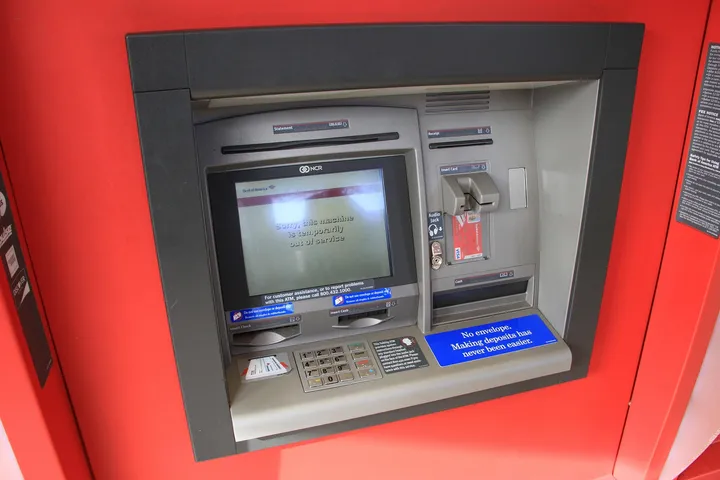
Plenty of people buy their first Bitcoin because they spotted an ATM in a Mong Kok laundromat or noticed a “Crypto” button in the ZA Bank app. Both work. But the cost and the protection could hardly be further apart. Answer three questions before you start and you’ll save real money: how much are you putting in, are you holding for the long run, and do you need the coins in a wallet you control?
Dipping a toe in with a few thousand dollars and no plans to withdraw? A bank or broker app is the least hassle: no new account, and the money comes straight out of your HKD balance. Buying regularly or in larger amounts? A licensed trading platform is cheapest, and FPS deposits are quick. Want a coin the licensed venues don’t offer, or need to buy with a card right now? Then you’re looking at an international exchange, and you accept up front that Hong Kong investor protection won’t apply. Cash at an ATM or shop gives you more privacy, but often costs dozens of times what a licensed platform charges.
- Choose a route
Decide by amount and purpose: licensed platform, bank app, international exchange or cash. Not sure? Start with our beginner’s guide.
- Open an account and verify your identity
Licensed platforms usually ask for an HKID or passport, proof of address and a virtual asset knowledge assessment. International exchanges typically want an ID document and a selfie.
- Fund it
On a licensed platform, deposit HKD by FPS or eDDA. On an international exchange, use Visa, Mastercard, Apple Pay or a USD wire.
- Place your order
An instant “buy” button is simplest for beginners, but the spread is baked into the price. Limit orders cost less once you know your way around.
- Decide where to keep it
Leaving coins on the platform is easiest; for long-term holding consider a hardware wallet. Before a licensed platform lets you withdraw to a private wallet, you have to prove the wallet is yours.
Licensed vs unlicensed: what actually changes
Since 1 June 2023, running a virtual asset trading platform in Hong Kong has required a licence from the Securities and Futures Commission (SFC). Licensed platforms must hand client assets to an associated trust company, keep most of them in cold storage, run a knowledge assessment on retail customers and cap their exposure. Retail clients can only trade large-cap tokens that appear in at least two indices from independent providers. That is why OSL offers retail customers just four coins (Bitcoin, Ether, Solana and XRP) while global exchanges list hundreds.
“Deemed-to-be-licensed” trips a lot of people up. Crypto.com’s Hong Kong company applied in February 2024 and is still a deemed-to-be-licensed applicant; the SFC’s list page states plainly that such applicants are not formally licensed. Meanwhile OKX, Bybit, KuCoin, Gate and MEXC restrict Hong Kong in their terms, and Bybit and MEXC are on the SFC’s list of suspicious platforms. Checking takes a minute: match the company name and CE number on the SFC’s list page, then make sure the web address matches exactly. Clone domains impersonating HashKey, EX.IO and DFX Labs have been added to the Alert List again and again in recent months.
The real cost: what HK$10,000 of Bitcoin costs by route
Fees are the biggest difference between Hong Kong’s buying routes. The chart below uses each operator’s published charges to price an HK$10,000 Bitcoin purchase, before spreads and before any foreign-currency fee from your bank. “Zero commission” instant-buy buttons on licensed platforms still carry a spread, and international exchanges settle in US dollars, so your card issuer may add an FX charge on top.
ATMs are expensive because the operator carries rent, cash handling and price risk, and sells you an instant, low-paperwork service. COINHERO members get the fee halved to 6.5%, which is still far above any licensed platform. If it’s cash you need, first check which 8 machines buy crypto back, and whether cashing out through your bank works out cheaper.
How Hong Kong buyers pay
FPS is the go-to way to fund a licensed platform in HKD: punch the platform’s FPS identifier into your banking app and the money usually arrives within minutes. eDDA (electronic direct debit authorisation) lets the platform pull the money straight from your bank account; HashKey calls it “Quick Deposit”. On cards, OSL accepts Visa, Mastercard and Apple Pay, but plenty of card issuers book crypto purchases as a cash advance, with an extra fee and interest from day one.
Octopus, AlipayHK and WeChat Pay HK are not funding methods at any licensed platform. AlipayHK and WeChat Pay have long banned crypto-related payments, and using them to pay on a P2P market can get your wallet account shut down.
Most people in Hong Kong only need two accounts: a licensed platform for HKD in and out, and a wallet they control for long-term storage.
International exchanges and ATMs have their uses, such as an instant card purchase or a cash deal, but they shouldn’t be your main way in. The time worth spending is at sign-up: get identity checks and bank linking done properly once, and every deposit after that takes minutes.
What changed in 2025 and 2026
Hong Kong’s crypto rules have moved so fast over the past eighteen months that a lot of what’s online is already out of date. These are the changes that matter most to buyers; the detail is in our regulation guide and our page on the Stablecoins Ordinance.
- 1 Aug 2025Stablecoins Ordinance takes effect
Only licensed parties may offer specified stablecoins to the public; the government told LegCo that exchange shops are not permitted offerors.
- 24 Dec 2025Dealing and custody consultation concludes
OTC dealing, including walk-in shops and ATMs, is to be licensed by the SFC, with no transitional period.
- 10 Apr 2026First stablecoin issuer licences
The HKMA licensed HSBC and Anchorpoint (a Standard Chartered, HKT and Animoca venture); both plan HKD stablecoins first.
- 16 Sep 2026Policy Address
Commits to letting licensed stablecoins trade on licensed platforms and to pushing tokenised assets forward.
- Within 2026 (pending)VA dealing and custody bill
As of 6 October 2026, the bill has not been gazetted or introduced to LegCo.
Buying with cash: ATMs and walk-in shops
Hong Kong is one of the few cities in Asia that still has a large network of crypto ATMs. Adding up the operator lists gives COINHERO 88 machines, CoinUnit 77, Localcoin 34 and One Satoshi 3, about 202 in total; in September 2026 the South China Morning Post quoted Coin ATM Radar’s figure of 236. Most machines sit in 24-hour laundromats, claw-machine arcades and malls, take only HK$500 or HK$1,000 notes, and only sell to you. They don’t buy back.
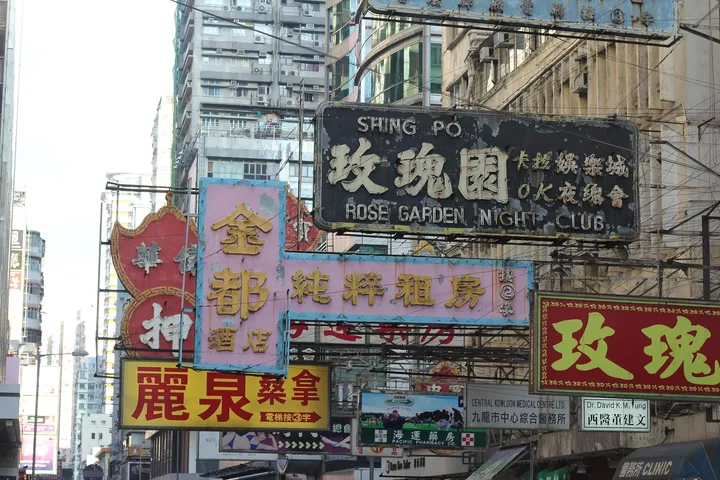
Walk-in shops are a different animal. In 2024 the government estimated there were around 200 physical virtual asset OTC shops in Hong Kong, clustered in Mong Kok, Tsim Sha Tsui, Causeway Bay and Kwun Tong. They are not SFC-licensed today, and since the Stablecoins Ordinance took effect, offering stablecoins such as USDT to the public falls into regulated territory, which has pushed many shops to quote privately. The coming dealer licence has no transitional period, so unlicensed shops will have to close when it starts. Before you walk into one, read our crypto shop guide and our rundown of common scams.
Frequently asked questions
Is it legal to buy crypto in Hong Kong?
Yes. Nothing in Hong Kong law stops an individual from buying, holding or selling crypto. The licence requirement sits with the business: anyone running a virtual asset trading platform in Hong Kong, or actively marketing one to Hong Kong investors, needs an SFC licence. As of October 2026 the SFC lists 13 licensed platforms. The full rules are in our guide Is crypto legal in Hong Kong?
What is the fastest way to buy Bitcoin in Hong Kong?
If you already have an account at a licensed platform, an FPS deposit usually lands within minutes and you can trade straight away. Starting from scratch, a card or Apple Pay purchase on an international exchange is quickest, but it costs more and carries no Hong Kong investor protection. A Bitcoin ATM is instant too, at up to 13% plus HK$100. Timings for each route: fastest way to buy crypto.
Are there Bitcoin ATMs in Hong Kong?
Yes. Operator lists from COINHERO, CoinUnit, Localcoin and One Satoshi show about 202 crypto ATMs across Hong Kong (count taken 6 October 2026), mostly inside 24-hour laundromats, claw-machine arcades and malls. Only 8 of them let you sell crypto for cash. Locations and fees are on our Bitcoin ATM map.
Can I buy crypto with FPS?
Yes, as long as you are paying into an account in your own name at the platform. Licensed venues such as HashKey Exchange and OSL take HKD deposits by FPS or eDDA. Paying a stranger by FPS on a P2P market is far riskier: you can end up receiving scam money and having your bank account frozen. See our FPS deposit guide.
Do I pay tax on crypto profits in Hong Kong?
Hong Kong has no capital gains tax, so an individual holding crypto as a long-term investment normally pays nothing on the rise in value. If you trade frequently and in an organised way, or run a business with crypto, the Inland Revenue Department can treat the gains as business profits and charge profits tax. Details: crypto tax in Hong Kong.
Can I use an overseas crypto exchange in Hong Kong?
Some, yes, but none of them holds a Hong Kong licence. OKX, Bybit and KuCoin restrict Hong Kong users in their terms, while some international platforms, including CEX.IO and Kraken, do not currently list Hong Kong as unsupported. Using an unlicensed platform is not illegal for you, but the SFC advises trading only on licensed venues, and you get no Hong Kong investor protection if something goes wrong.
Sources
- SFC: Lists of virtual asset trading platforms · checked 6 Oct 2026
- SFC: Suspicious virtual asset trading platforms (Alert List) · October 2026
- HKMA: Register of licensed stablecoin issuers · since April 2026
- FSTB: Consultation conclusions on VA dealing and custody services · 24 Dec 2025
- COINHERO: ATM locations and fees · 6 Oct 2026
- CEX.IO: Unsupported countries and regions · 6 Oct 2026
Ready to buy your first coin?
Sign-up and identity checks take a few minutes. Then buy Bitcoin, Ether or USDT with Visa, Mastercard or Apple Pay.
It is not licensed by Hong Kong’s SFC, so local investor protection does not apply. For HKD and FPS deposits, use a licensed platform.