Yes, you can buy Bitcoin in Hong Kong, and it is entirely legal. The government told LegCo back in 2014 that Bitcoin is a "virtual commodity" rather than legal tender, and nothing since has stopped individuals buying or holding it. What is regulated is the business selling it to you: since 1 June 2023, running a virtual asset trading platform in Hong Kong, or actively marketing one to Hong Kong investors, requires a licence from the Securities and Futures Commission (SFC). As of October 2026 the SFC lists 13 licensed platforms.
This page is about Bitcoin (BTC) specifically. We take the five routes Hong Kong residents actually use and look at each through a Bitcoin lens: fees, whether you can withdraw, and where the coin ends up. If you want the wider picture across coins and exchanges, the home page top-10 is the place to start.
Buy Bitcoin in Hong Kong: the five routes side by side
Two questions separate these routes more than price does. Can you take the Bitcoin out to a wallet you control? And is there a Hong Kong regulator standing behind the firm? The headline fees below come from operator pages or, where marked, secondary reporting; the spread between buy and sell prices comes on top.
| Route | Examples | Headline cost | Withdraw / protection |
|---|---|---|---|
| Licensed platform | HashKey Exchange, OSL | 0% (spread) to 0.29% | Withdraw SFC-supervised |
| Bank or broker app | ZA Bank, Mox, Futu, Tiger | 0.05% to 1.5% + HK$15 | Mostly no executed on a licensed VATP |
| Spot Bitcoin ETF | 3042, 3439, 3008, 2818, 3430 | Brokerage + fund fee | No coins SFC-authorised fund |
| ATM or shop | COINHERO, CoinUnit, Localcoin | Up to 13% + HK$100 | Straight to wallet not VA-licensed yet |
| Offshore by card | International exchanges | 0.49–4.99% + service charge | Withdraw no HK protection |
Operator websites and published fee tables, checked 6 October 2026. HashKey and ZA Bank fees are from secondary sources.
Route 1: an SFC-licensed platform
For anyone planning to hold Bitcoin for years, or to move it into a hardware wallet, a licensed platform is usually the right base. The two that most retail investors use are HashKey Exchange (CE number BPL992) and OSL (BPJ213), both owned by HKEX-listed groups (stock codes 3887 and 863). Both take HKD deposits by FPS and eDDA; OSL also accepts Visa, Mastercard and Apple Pay. OSL opens just four coins to retail clients (BTC, ETH, SOL and XRP), which tells you how tightly the SFC's "eligible large-cap" rule bites. Bitcoin is always on the list.
Sign-up is slower than an app download. Licensed platforms must run a virtual asset knowledge test and risk profile on every retail client and set an exposure limit, so allow a few days the first time. On cost, OSL's Flash Trade advertises zero commission with the cost built into the spread, while HashKey's base fee for regular users is reported at 0.29%. We compare the pair in detail in HashKey vs OSL.
The quiet advantage is custody. Licensed platforms have to hold client coins through an associated trust company, mostly in cold storage. That is not a guarantee, but if something goes wrong there is a regulator with jurisdiction and a rulebook to point to.
Route 2: a bank or broker app
Plenty of people meet Bitcoin as a button inside an app they already use. ZA Bank became Asia's first bank to offer retail crypto trading on 25 November 2024, with HashKey executing the trades. Mox followed on 28 January 2026, also through HashKey, and is running zero buy commission until 31 December 2026. Tiger Brokers routes through its own licensed platform, YAX, and its official fee page lists zero commission, zero platform fee and a 0.05% handling fee.
The catch is structure. Most of these services use an omnibus account: the Bitcoin in your app is held by the bank or broker at a licensed platform, and you can only buy and sell it for dollars. Withdrawing to your own wallet is generally not possible. Victory Securities' VictoryX app is a notable exception that advertises token transfers in and out. Fees and features for each app are in our bank and broker comparison.
A Kwun Tong office worker paid into HSBC who wants HK$3,000 of Bitcoin a month has two sensible options, and the choice is about control, not price.
If she only wants price exposure and plans to sell back to HKD one day, a bank or broker app is enough. If she expects to move the coins to her own wallet in a few years, she should open a licensed platform account from the start and fund it by FPS each month. Switching later means selling and rebuying.
Route 3: spot Bitcoin ETF or the coin itself?
Asia's first spot virtual asset ETFs listed on HKEX on 30 April 2024. As of October 2026 we can identify five spot Bitcoin ETFs: ChinaAMC Bitcoin ETF (3042), Harvest Bitcoin Spot ETF (3439), Bosera HashKey Bitcoin ETF (3008), Pando Bitcoin ETF (2818) and MicroBit Bitcoin Spot ETF (3430). The last two codes come from secondary sources, so confirm them on HKEX before you trade.
Buy 3042, 3439 and peers
- Works in any Hong Kong brokerage account
- You own fund units, not coins you can move
- Management fee plus brokerage
- Trades only during HKEX hours
Hold Bitcoin directly
- Withdraw to a wallet you control
- Trades around the clock, weekends included
- You manage keys and backups
- Fees and spreads vary by platform
Picture a family in Tin Shui Wai that already holds a Futu account. If all they want is a small slice of Bitcoin's price movement alongside their stocks, an ETF keeps everything in one statement with no keys to lose. If what matters is owning a coin nobody else can freeze, an ETF can never give you that. The Bitcoin ETF guide covers tickers and costs in depth.
Route 4: Bitcoin ATMs and walk-in shops
Hong Kong still has one of Asia's densest crypto ATM networks. Counting operator lists on 6 October 2026, we get COINHERO 88, CoinUnit 77, Localcoin 34 and One Satoshi 3: about 202 machines, mostly in 24-hour laundromats, claw-machine arcades and malls. COINHERO charges unregistered users 13% plus HK$100 to buy (6.5% for registered members), with a HK$500 minimum and a first note that must be HK$1,000 or HK$500. Localcoin's machine data shows 13.5% plus HK$23; CoinUnit only shows its fee on screen.
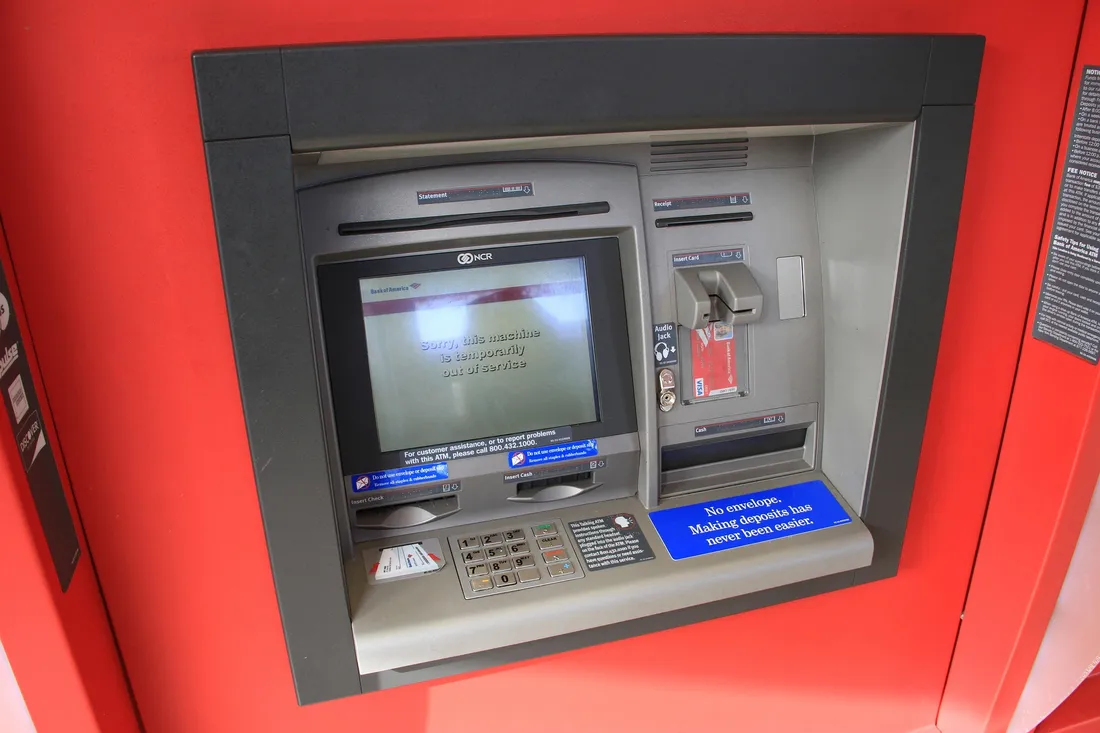
Going the other way is harder. Only eight machines in the territory buy Bitcoin back, all of them COINHERO units, at 13% plus HK$25. These are the operator-listed locations:
Walk-in shops are a different animal. The government estimates around 200 physical crypto OTC shops in Hong Kong, none of them SFC-licensed. A bill to license virtual asset dealers had not been introduced to LegCo as of 6 October 2026, and when it arrives there will be no transitional period. Read the Bitcoin ATM map and the crypto shop guide before carrying cash anywhere.
Route 5: an international exchange by card
Offshore exchanges win on speed and range. Once your ID is verified you can buy Bitcoin by Visa, Mastercard, Apple Pay or Google Pay in minutes. Our editor's pick, CEX.IO, was founded in London in 2013; Hong Kong is not among its 30 unsupported jurisdictions, and Hong Kong customers contract with CEX OVRS LLC in Nevis. Card purchases cost 0.49% to 4.99% plus a service charge, spot trading is up to 0.25%, and new accounts are capped at US$1,000 a day and US$3,000 a month for the first three months.
Be clear-eyed about the trade-off. CEX.IO is not licensed by the SFC, so Hong Kong investor protection does not apply. It settles in USD, EUR or GBP with no HKD or FPS, which means your card issuer may add a foreign-currency fee or even treat the purchase as a cash advance. More in buying crypto with a credit card.
Sats, BTC/HKD pricing and what a purchase really costs
New buyers often assume they need a whole Bitcoin. They don't. One Bitcoin splits into 100 million satoshis ("sats"), so HK$500 buys a small fraction of a coin and that is perfectly normal. The converter at the top of this page uses CoinGecko's BTC/HKD reference price to show roughly what you would receive; the executed price will differ once fees and spread are applied.
To compare routes honestly, add three things: the headline fee, the spread, and deposit or withdrawal charges. "Zero commission" never means zero cost. An ATM's 13% already bundles most of its costs, but the starting point is high. Withdrawing from a licensed intermediary usually costs a small network fee in BTC; Victory Securities, for example, publishes 0.00006 BTC for the first withdrawal of the day.
After you buy: holding Bitcoin yourself
Leaving coins on a licensed platform is the easy option. If you want to hold them yourself, expect one extra step: under the SFC's anti-money-laundering guideline, a licensed platform must check that a private wallet is really yours before releasing coins to it. In practice that means signing a message with the wallet or sending a tiny test amount, after which the address is whitelisted.
Hardware wallets are easy to buy locally. Official-channel Ledger devices are listed on price-comparison sites at HK$429 to HK$2,388, and Fortress lists the Nano X at HK$1,299 (secondary source). Hong Kong-founded OneKey publishes a list of authorised local resellers; Trezor's reseller page names none in Hong Kong.
- Start small
Buy a modest amount first and run the whole withdrawal once, so you know the real fee and timing.
- Set up and back up
Create a hardware or app wallet and write the recovery phrase on paper. Never photograph it or store it in the cloud.
- Verify the address
Add the address on the platform, sign the message or send the test amount, and wait for approval.
- Check the network
Confirm the withdrawal is on the Bitcoin network and compare the first and last characters of the address before moving larger sums.
One last thing: this page compares ways to buy, not whether to buy. Bitcoin's price moves sharply in both directions, so only put in money you can afford to lose.
Frequently asked questions
Where can I buy Bitcoin in Hong Kong?
Five places: an SFC-licensed platform such as HashKey Exchange or OSL; a bank or broker app such as ZA Bank, Mox, Futu or Tiger; a spot Bitcoin ETF on HKEX; one of roughly 202 crypto ATMs or a walk-in shop; or an international exchange by card. Only the licensed platforms combine Hong Kong regulation with the option to withdraw coins to your own wallet.
What is the minimum amount of Bitcoin I can buy?
Bitcoin divides into 100 million satoshis, so the coin itself has no practical minimum. The channel sets the floor: HK$500 at a COINHERO ATM, about HK$600 per trade at ZA Bank (secondary source), and HK$80 at Futu when it launched crypto in 2024. Licensed platforms set their own first-deposit rules, so check before you sign up.
Is it better to buy a Bitcoin ETF or real Bitcoin?
It depends on what you want to own. An HKEX-listed spot ETF such as 3042, 3439 or 3008 sits in a normal brokerage account with simple records, but you hold fund units, pay a management fee and cannot withdraw coins. Buying Bitcoin directly lets you self-custody, at the cost of managing keys. Neither is a recommendation. See our Bitcoin ETF guide.
Can I sell Bitcoin for cash at a Hong Kong ATM?
Yes, but only at a handful. Of about 202 machines on operator lists (6 October 2026), just eight COINHERO units buy coins back, at 13% plus HK$25 for unregistered users. CoinUnit handles sales through an online request form, and Localcoin does not offer selling. For most people a licensed platform paying out by FPS is cheaper; see cashing out.
Do I pay tax on Bitcoin gains in Hong Kong?
Hong Kong has no capital gains tax, so an individual holding Bitcoin as a long-term investment generally pays nothing on the rise. Frequent, organised trading or running crypto as a business can make profits taxable under profits tax, judged on the badges of trade. Details in our crypto tax guide.
Sources
- SFC — Lists of virtual asset trading platforms · checked 6 Oct 2026
- COINHERO — ATM locations and FAQ · 6 Oct 2026
- Tiger Brokers HK — virtual asset fees · 6 Oct 2026
- IFEC — Virtual asset spot ETFs · updated 27 Oct 2025
- CEX.IO — unsupported countries list · 6 Oct 2026
Ready for your first coin?
Sign-up and the ID check take a few minutes. Then buy Bitcoin, Ether or USDT with Visa, Mastercard or Apple Pay.
It is not licensed by Hong Kong’s SFC, so local investor protection does not apply. For HKD and FPS deposits, use a licensed platform.