
Where our facts come from
We rank sources by how close they are to the thing being described, and we use the closest one we can get.
- Regulators and registers
The SFC’s lists of licensed and applicant trading platforms, its suspicious platforms alert list and press releases; the HKMA register of licensed stablecoin issuers; Customs (C&ED) guidance on money service operators.
- Laws and government records
Ordinances on eLegislation (for example Cap. 615 and Cap. 656), government press releases, LegCo papers and replies, and FSTB consultation documents.
- Operators’ own pages
Fee schedules, supported-country lists, terms of service and machine location lists published by exchanges, banks, brokers and ATM operators.
- Press and third parties
Used when no primary source exists, and labelled as such. We do not republish a “news” item without its original dated source.
Dates and labels
Every page shows the month its data was checked and the date it was last updated. Inside articles, time-sensitive facts carry their own date, such as “as of October 2026” or the date on the regulator’s list. When information rests on a company’s own statement, we call it a company claim. When it comes from press or an aggregator, we say so. When sources conflict or a fact could not be confirmed, we write “unconfirmed” and explain what is missing, rather than picking the more convenient version.
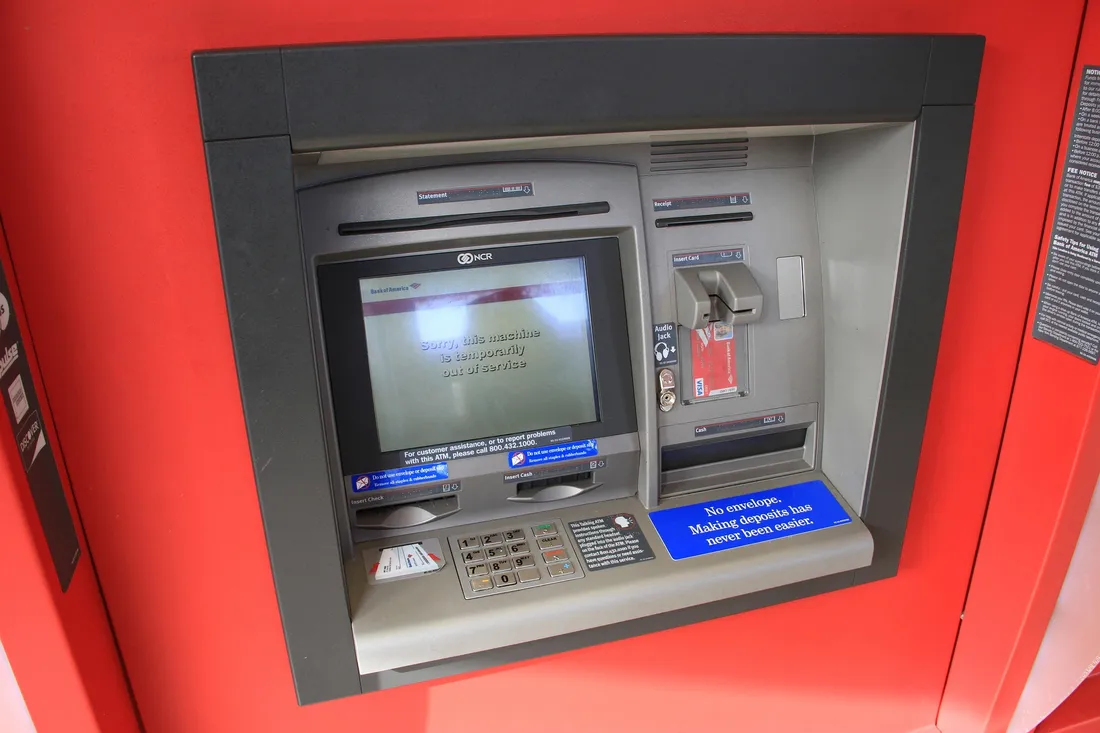
ATM and shop counts come from operators’ published location lists (our current inventory was compiled on 6 October 2026), not from site visits. We do not claim to have tested apps, visited shops or opened accounts. Where we describe how a sign-up or deposit works, we describe the process as the operator documents it.
How platform scores are built
Exchanges, apps and services that we review receive an editorial score out of 10. Each criterion below is scored from 0 to 10 against written guidance, then weighted. The same score is used everywhere on the site, in both languages.
| Criterion | What we look at |
|---|---|
| Licence status and HK access | SFC licence or applicant status, regulation elsewhere, whether the platform’s own terms accept Hong Kong residents, alert-list history. |
| HKD funding and payments | FPS, eDDA and HKD bank transfer; cards, Apple Pay and Google Pay; foreign-currency friction. |
| Fee transparency | Whether trading, card and withdrawal fees are published and clear, and their level. |
| Ease of use and support | Sign-up and verification steps as documented, app availability, Chinese and English support. |
| Coin choice | Number of assets available to Hong Kong retail customers. |
| Track record and security | Years operating, custody arrangements, incidents and enforcement history. |
Scores describe how well a platform serves a Hong Kong resident, not whether its price will rise. They are not investment advice. Our list of SFC-licensed platforms is kept separate from any ranking, so licence status is never blurred by a score.
How often we re-check
We re-check the SFC’s licensed list and alert list at least monthly and whenever the SFC announces a change. Fees, payment methods and supported countries are reviewed at least quarterly, or sooner when an operator announces a change. ATM and shop lists are re-compiled from operator sources at least quarterly. Legal developments, such as the virtual asset dealing and custody bill, are updated when there is an official step. Readers can speed this up: if you see something out of date, tell us.
Ready for your first coin?
Sign-up and the ID check take a few minutes. Then buy Bitcoin, Ether or USDT with Visa, Mastercard or Apple Pay.
It is not licensed by Hong Kong’s SFC, so local investor protection does not apply. For HKD and FPS deposits, use a licensed platform.